
Adjutant’s Call February 2026
Circular Memorandum #573, February 2026
“Conquer or Die: Partisan Warfare in 1862 Western Kentucky”
Presented by: Derrick Lindow
Date: Friday, February 13 Location: Big Spring Country Club
Cocktails: 6:00 PM Dinner: 7:00 PM Program: 8:00 PM
Meet our Speaker - Derrick Lindow

Derrick Lindow is an 8th grade US History teacher in Owensboro, Kentucky. He holds a bachelor of arts in history from Kentucky Wesleyan College and a masters in education from the University of the Cumberlands. He also holds a masters in history from Western Kentucky University. In 2019 he was awarded the James Madison Memorial Fellowship for the state of Kentucky and is also a Kentucky Colonel. He is the owner and co-administrator of the Western Theater in the Civil War website and blog. We Shall Conquer or Die is his first book with another currently being written. At home are his two boys Ezra and Owen and his wife of 14 years, Allie.
“Conquer or Die: Partisan Warfare in 1862 Western Kentucky”
In the summer of 1862, partisan ranger warfare entered western Kentucky as Adam Rankin Johnson attempted to raise a regiment behind Union lines. A partisan ranger regiment operated differently than a typical cavalry regiment, mostly since their activities were behind enemy lines. He gained recruits with flashy attacks and raids that not only reached the local newspapers, but even the international press, especially when he captured Newburgh, Indiana in July 1861. To remain a viable and active force, Johnson had to constantly resupply his men by capturing Union equipment and weapons. This activity forced the Union to redirect several infantry and cavalry regiments, Brown Water Navy vessels, and valuable resources that could have been used with the main armies advancing in the South. Eventually the Union learned how to quel Johnson's success and re-establish control behind their own lines, but not before many lives and millions of dollars of valuable military goods were lost.
Reservations Are to be Sent to Doug Krawczyk or Made on Our Website
If you do not make a reservation, you may not get fed!
This is a FRIDAY meeting.
The Round Table must give Big Spring an accurate count of reservations no later than Wednesday before our Friday meeting. Reservations can be made by emailing Doug Krawczyk at rdklou1@gmail.com or by calling Doug Krawczyk at 502-592-6864.
When making a reservation for more than yourself, please list the names of everyone for which you are making a reservation. If you are calling Doug, and get his voicemail, please spell your name so he can properly identify the reservation.
If you wish to join us for just the program, you must still make a reservation so we can assure you have space and a seat. If you are attending just the program, you can call Doug anytime up to 4:00 PM the day of the Meeting.
Reminder for Table Reservations: Tables for parties of eight (8) can be reserved. When making a Table Reservation, please list the names of everyone in your party. That will ensure everyone in your party will be at the same table and enable us to manage our meeting space in a more efficient manner.
Make Your Meeting Reservations Online!
Members of the Round Table now have new options for making dinner reservations, You can go to our new website, www.LouisvilleCWRT.com and make your meeting reservation and make your payment.
Field Trip to the Carolinas: Sherman’s 1865 Campaign: April 22-26, 2026
$200 Non-refundable Deposit is Due

You can pay the $200 non-refundable deposit by mailing your $200 check made out to LCWRT directly to Louisville Civil War Round Table, 9462 Brownsboro Road - #142, Louisville, Ky., 40241. The $200 non-refundable deposit is now due which will guarantee your reservation for the trip. You can also pay the deposit by going to our website, www.louisvillecwrt.com and scrolling down in the Events tab to the Field Trip. We are going to the Carolinas to learn about the Civil War’s last major campaign that took place in March and April of 1865 culminating in the surrender of the Confederacy’s last major army. The campaign pitted William Sherman against Joseph Johnston. Our guide will be Civil War historian and author Wade Sokolosky. Wade was recently named the new Executive Director of the Blue and Gray Educational Society. He is a retired colonel and a 25-year veteran of the U.S. Army. He is a respected historian and the author of four books with more on the way. Wade has been leading battlefield tours for many years and is recognized as an authority on the Civil War battles in the Carolinas. Wade will be coming to the Round Table to speak to us this December. This is a field trip we have never taken and we will see several well preserved battlefields including Averasboro, Monroe’s Crossroads, Wise’s Forks and Bentonville. We will also see the ironclad CSS Neuse and many other historical sites along the way. We will be staying in Smithfield, North Carolina. We will walk this hollowed ground and cover in detail what unfolded. You can sign up now by emailing John Davis at jddavis1122@gmail.com or you can sign up at the meetings.
The Battle of Averasboro
We will be visiting the Averasboro battlefield on our field trip. Thanks to preservation efforts, nearly 600 acres of the core battlefield are preserved. The following summary of the battle is taken from the American Battlefield Trust’s website and it is through their efforts that this land has been saved.
Major General William T. Sherman remained active following the fall of Atlanta. Once his armies were reorganized, Sherman and his armies cut a swath across Georgia during his March to the Sea. The march destroyed Georgia’s capacity for making war by inflicting more than $100 million in damages. The city of Savannah was offered to President Lincoln as a Christmas gift. Next, Sherman and his armies unleashed their wrath upon the birthplace of secession: South Carolina. The state capital of Columbia was burned, railroads and rolling stock destroyed, and throngs of slaves freed. The Confederate forces in the Carolinas could do little to slow Sherman.
By March of 1865, the overall Confederate command in this region (two military departments) fell once again on the shoulders of Gen. Joseph E. Johnston. Jefferson Davis was reluctant to restore Johnston, but with the Confederacy shrinking by the day, Davis had little choice. In turn, Johnston knew that there was little that he could do to stop Sherman on his own. He determined to gather all of the Confederate forces he could muster—including the smashed ruins of John Bell Hood’s army—and then move north toward Robert E. Lee and the besieged Rebel armies around Richmond and Petersburg. The combined weight of Confederate arms would hopefully be enough to thwart the Yankees.
Sherman’s armies moved in two wings as they drove north through North Carolina. The left-wing moved toward the state capital at Raleigh, while the right-wing drove toward the road junction at Goldsboro, NC.
On the afternoon of March 15, 1865, Sherman's cavalry screen under Brig. Gen. Hugh Judson Kilpatrick came up against Lt. Gen. William Hardee’s corps, consisting of two infantry divisions commanded by Brig. Gens. William B. Taliaferro and Lafayette McLaws, and a division of cavalry under Maj. Gen. Joseph Wheeler. The Confederates were deployed across the Raleigh Road near Averasboro, 40 miles south of Raleigh. Hardee’s orders were to delay Sherman’s 25,000-man left-wing of Maj. Gen. Henry W. Slocum so that Johnston could consolidate his remaining forces to defend the road networks connecting Raleigh and Goldsboro. Hardee posted his 6,000-man corps in a well-chosen position astride the road, with the Cape Fear River anchoring his right flank and the Black River swamps to the east anchoring his left.
After reconnoitering the Confederate defenses, Kilpatrick withdrew and called for infantry support. During the night, two divisions of the Brig. Gen. Alpheus Williams’s XX Corps arrived to confront Hardee’s men arrayed across the plantation of the John C. Smith family. At dawn on March 16, Williams’s infantry advanced against McLaws’s division on the Confederate left and drove back the rebel skirmishers but was stopped by the main Confederate line and a sharp Rebel counterattack. Around mid-morning, Williams renewed his advance with reinforcements on his left and drove Taliaferro’s Confederates from two lines of works but was repulsed upon reaching a third line of defenders. Late that afternoon, two divisions from Maj. Gen. Jefferson C. Davis’s Union XIV Corps arrived on the field and attempted to flank the Confederate right where they were stopped with significant casualties by Wheeler's dismounted cavalry. Sporadic fighting continued into the evening with little result.
Around 8:30 p.m., Hardee withdrew from the battlefield and retreated north toward Smithfield, leaving his campfires burning to conceal his departure. The penultimate battle for the Carolinas set the stage for Sherman’s and Johnston’s last major battle of the Civil War at Bentonville. There were 1547 casualties in the battle.
Harold Holzer is Coming to the Louisville Civil War Round Table!

Mark your calendars for our 600th meeting celebration to be held on May 9, 2026. To help us celebrate this special event, we are very excited to have renowned Abraham Lincoln scholar Harold Holzer come and speak to us. He is one of the country's leading authorities on Abraham Lincoln and the political culture of the Civil War era. A prolific writer and lecturer, and frequent guest on television, Holzer served for six years (2010–2016) as Chairman of The Lincoln Bicentennial Foundation. We are planning several special ways that we will commemorate this special occasion. Stay tuned for details as this will be a meeting you will not want to miss!

PINS, PINS, PINS!!!
We are pleased to announce the arrival of our NEW LCWRT LAPEL PINS. THEY LOOK GREAT! Celebrate our amazing history and show your LCWRT pride by picking up a pin and joining in the anniversary celebration (donations for the pins will be accepted and used to support our mission to study and preserve CW history). Quantities limited.
2025 – 2026 Schedule
Friday February 13 Derrick Lindow “Conquer or Die: Partisan Warfare in 1862 Western Kentucky”
Saturday March 14 Chris Kolakowski “Perspectives on the 1862 Virginia Campaigns”
Saturday April 11 Will Greene “Lost Opportunity: Grant Crosses the James”
Saturday May 9 Harold Holzer “Abraham Lincoln”
Longtime Round Table member Robert Norvelle Wathen, Jr., 82, passed away on December 9, 2025. Born in Kansas City, Missouri, he was the son of the late Robert Norvelle Wathen and Ella Patricia Hennessy, and was preceded in death by his sister, Laura Ann Robinson.
He is survived by his wife of 61 years Cindy Wathen; half-sister Kathy Mason; daughters Catherine, Sarah (Thomas), Elizabeth (Jon), Jennifer (J.C.), and Melissa; grandchildren Christine, Molly, Emma, Anna, Gregory, and Connor; and great-grandchild Theodore.
Norvelle attended Holy Spirit, Catholic Country Day, and Kentucky Military Institute, later attending the University of Cincinnati.
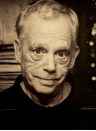
Norvelle was raised in a family deeply rooted in Kentucky’s distilling heritage. His father and uncle, J.B. Wathen, were owners of Wathen Brothers Distillery before selling it to National Distillers. He was a devoted collector of Old Grand-Dad memorabilia, reflecting his family’s connection to the brand prior to its sale to Jim Beam. Norvelle took great pride in this heritage and dedicated much of his life to preserving and sharing its history.
A lifelong student of history, Norvelle was widely respected for his expertise, both locally and nationally. He was a member of the Louisville Civil War Round Table, the National Society of the Sons of the American Revolution, and a founding member of Little Big Horn Associates. He was also a published author of An Aerial Perspective, featuring aerial photography of the Little Big Horn battlefield. Driven by his love of history and desire to learn, Norvelle assembled an extensive library covering the Civil War, General Custer, and Western history. For the Round Table’s 50th anniversary, Norvelle helped put together a publication titled “Kentucky in the Civil War: 150 for the 150th”. This was an annotated bibliographic reference book listing the 150 most important publications on Kentucky in the Civil War. Norvelle also took numerous pictures of our speakers that are in our archives. Norvelle was well known for his love of cats and he kept and took cared of a number of his feline friends in his home.
Norvelle worked as a commercial photographer, documenting events for the Kentucky Derby Festival and local manufacturers. He later owned an audio consulting business, through which he shared his love of music.
Norvelle had many friends in the Round Table and will be missed by all who knew him. Our heart felt sympathies go out to his family and friends.
From Chris Mackowski at the Emerging Civil War, is the following announcement of their next Symposium. A number of our members have attended in the past and highly recommend this event.
12th Annual Emerging Civil War Symposium at Stevenson Ridge
We’re pleased to announce our full line-up of speakers for our 12th Annual Emerging Civil War Symposium at Stevenson Ridge. Our event will be held August 7–9, 2025. Tickets are available for $325 each. Our theme will be “Partnerships and Rivalries.”
We’re pleased to feature TWO keynote speakers this year:
Harold Holzer—Presidents in Print: The Dueling Images of Abraham Lincoln and Jefferson Davis
Craig Symonds—Admirals in Blue and Gray: Farragut and Buchanan
Plus, we have a line-up of eight other speakers:
Kris White—“Heavens, How They Hate Him”: Braxton Bragg and the Army of Tennessee’s High Command
Dr. Angela Zombeck—Partners in Escape: POW Escape Attempts and Plots, Successful and Stymied
Joseph Ricci—“Not with a Pen but a Sword”: George H. Thomas and John M. Schofield
Pat Kelly-Fischer—Duel in the Desert: Canby and Sibley’s Fight for the West
Neil Chatelain—The Mississippi River vs. Everyone: How Grant, Foote, Pope, Farragut, Porter, Butler, Lovell, Johnston, Beauregard, and Hollins had to fight the “Father of Waters” before fighting each other
Ryan Quint—“With Friends Like These…”: Ambrose Burnside and Joseph Hooker, Late 1862
Tim Smith (of the East)—Friction in Command: Personal and Professional Conflicts Between the Union Commanders During the Gettysburg Campaign
Evan Portman—Frenemies: The Partnership and Rivalry of Joshua Chamberlain and Ellis Spear
Our popular Friday evening panel also returns, and we'll have a Sunday morning tour—so we have lots going on!
For information or to order tickets, visit our Symposium page.
President’s Note: Membership Ambassadors
SUSTAINABILITY: We are all LCWRT membership ambassadors. By bringing in new members, we will ensure OUR LCWRT endures. We are approaching our 600th meeting; this would not have been possible without all of us being asked to the Round Table at one time. Doug Krawczyk asked me to attend, fourteen years ago. Thanks, Doug.
GUESTS: Who make’s the best guest to bring to the Round Table meeting?? Do they have to be a former/current history professor?? Published author?? Nah,…. The best guest to bring to the LCWRT is your friend or neighbor who wants to learn more about the American Civil War and meet like minded, interesting folks, (or just eat really great fried chicken). I, personally, joined because I had lived in Europe for 6 years and had been an avid student of WWII history, and realized in my 40s, that I hadn’t really studied the Civil War much. Despite attending a military academy, my college and high school exposure to Civil War history was VERY limited.
HOW: EASY-PEASY – When you are making your reservation, just tell Doug their names or add them to the list of names when making your reservation on-line. You or your guest will be responsible for paying for dinner, but they are welcome to attend the meeting at no cost. If your guest arrives late, don’t forget to seek out Patrick, our treasurer, and make sure dinner has been paid for. Remember, you can be a guest only once. While attending subsequent meetings, guest may join the LCWRT or use the $20 day-pass option, if they plan to attend infrequently.
BUT IT’S LATE IN THE SEASON: Not to worry: new members joining in April or May, will have their membership extended into the following Round Table season.
Thank you, Bob Glass, President-elect, for stepping in for me this February. Happy Valentine’s Day and Happy Presidents’ Day, I’ll see you all in March with a guest in tow!!
Julie
Attest: By Order of:
John Davis Julie Bartlett
Adjutant President